Showing posts with label kids. Show all posts

May 1, 2013

My Last Post

When I first arrived here I had just gotten to know most everybody's names. The girls were the easy part, each one with her own distinct haircut, height, and manner of dress. The boys all wore the same three t-shirts that had been donated in mass along with the same navy blue trousers and all had the same height. After I had finally mastered most of their names they all went one day and got haircuts. I couldn't tell the difference between thirty boys all wearing the same three t-shirts, navy blue trousers and freshly shaved heads.


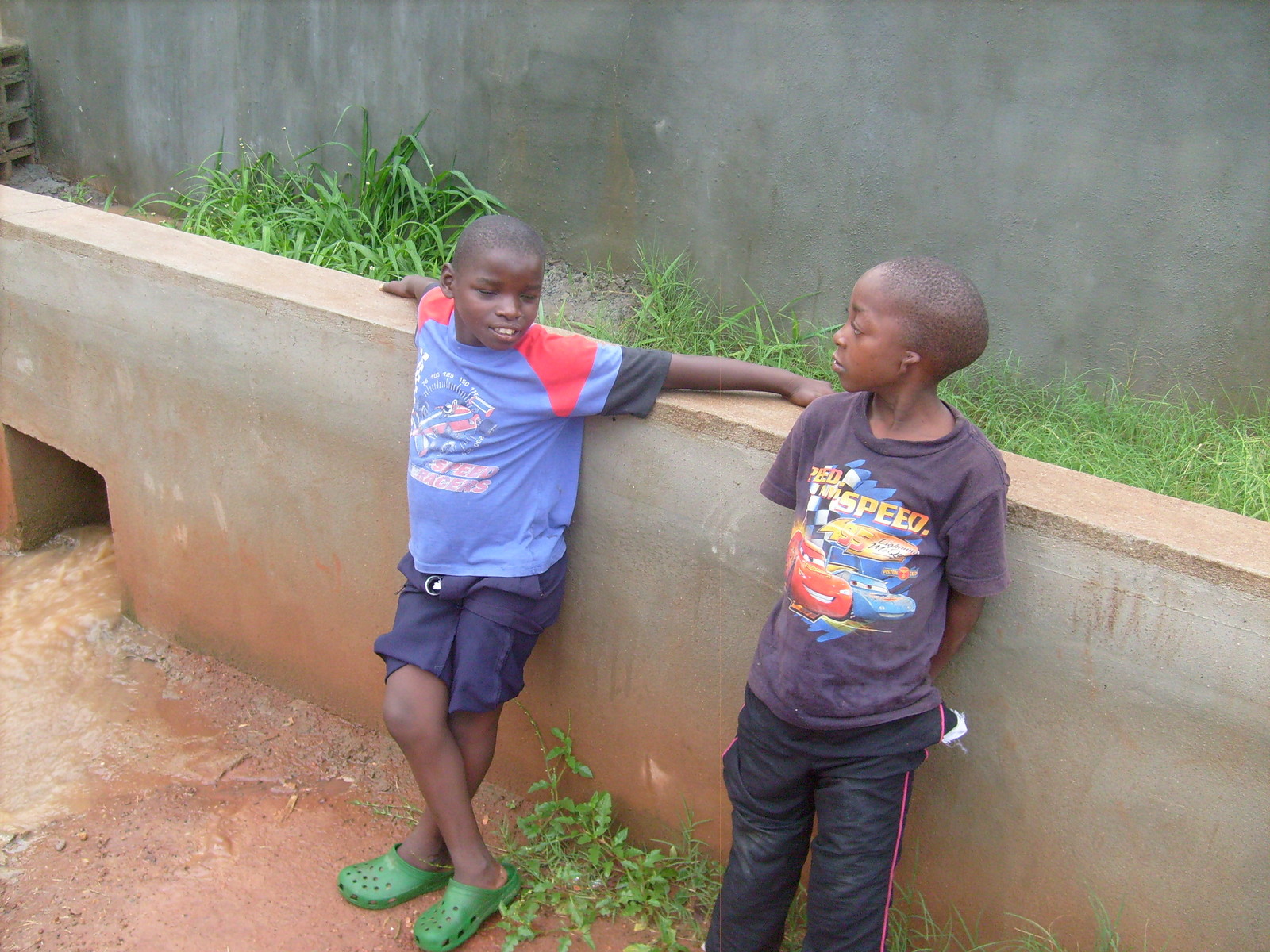
Now, after first showing up almost four years ago I can recognize as somebody walks into the dining hall just by hearing their footsteps. There are the fast, long paces of Victor, he knows where he wants to go and isn't wasting any time. That's the slow shuffle of Samito, never walking in straight line, always glancing around from left to right as if he was daydreaming. There is the thumping of Virginia, wanting everybody to know that she has arrived. There are the quick, light steps of Ofeita running away from the dragging feet of Jose. I have to replace Jose's sandals every month because he can't walk heel-to-toe. He just shuffles around driving his toes into the ground.


But, after first showing up almost four years ago, after knowing these kids just like my own family, it's time for me to leave. This is the last post I'll put up here, the last story to tell.


There are a myriad of things I could reflect on, a millions different experiences, thousands of stories, hundreds of people. But if there is one thing I wish I could transmit to you for you to fully grasp the entirety of my time at the orphanage, the thing that will stay with me the most, it would be the smells. Stay with me for a second here. Smell is a terribly powerful memory indicator. I think it's because for most of us, scent works in a more subconscious level than sight or sounds. I've discovered this more and more especially as I am removed from things that are brought to mind by certain scents. One day I may be reminded of the scent of the hand soap from my grade school, another day the interior the truck I used to drive, perhaps the food concessions at a little league game.


Other scents conjure memories and emotions far more specific and vivid and evocative than simple time or place, memories that move me for no discernible reason. All of a sudden my nose catches a scent so distinct for some unknown reason from the millions of other scents I've sniffed in my lifetime that and I'm transported to the dinner table at my grandparents, sharing a meal as we did oh so many times. Another occurs while driving on the road as the breeze comes through the cabin carrying with it the scent of wildflowers and suddenly I'm not driving across African grassland but am transported on a road trip across the great American West with friends. Walking through the market and catching a waft of a vendor frying eggs for sale and suddenly being thrown in the kitchen as dad prepares breakfast on a Saturday morning before starting the day's sundry chores.


The memories, the ones that give me pause and transport me to a time and a place so foreign to this one that I've inhabited for nearly four years, the ones that without warning or explanation move me to tears of both unexplainable sadness and indescribable joy are not focused on the scents themselves, nor an activity or place, but the memories associated with them. The ones that grip the core of my being are the ones where I'm surrounding the people I love, I miss dearly, and care about deeply.


I know that soon those scents and those unfathomable pauses will come not because I'm overcome by things and people which are once again familiar, but by those I am leaving behind here. The scent of fresh cookies being sold to the kids at elementary school as I am returning home for the day hand-in-hand with the kids. The hint of thyme on the evening breeze, sitting around complaining about how late the rains are. Grilling chicken inside of a broken down wheelbarrow. The dust settling in the evening as I lay out staring at the milky way, sitting with kids who are constantly puzzled at the joy it gives me admiring God's creation.


One evening I found myself sitting around rather melancholy in such a moment as I contemplated that I live a very long way from all my family and friends and everyone I'd ever loved when one of the little girls we have here came over to sit with me. She could tell I was a little out of sorts and asked what I was thinking about. I said I was thinking about my family and that is what was was making me said. Without missing a beat, she just said, "Hmm, I don't know why you're sad. I'm your family, and you're my family, and here we are together." I then had to explain to her that my tears were not because she made me sadder but in fact the opposite. Then she asked me to stop hugging her so tight.


The memories I take with me are of teaching and coaching little Victor to pass 7th grade. Spending hours with him studying and then hours more praying and fasting and interceding while he was taking the exams. The memories I take with me are of putting out kitchen fires and killing snakes. The memories I take with me are of sitting around with my battery powered radio one evening when the power was out and the dining hall was lit up by candles. The radio then started a program of only Glenn Miller songs (remember, the radio is weird). That night I taught the kids swing dancing till the batteries died. The memories I'll take with me are the first day we sent kids off to stay with their relatives for Christmas and only about eight kids stayed behind, including three little girls that had no family to go to. I spent the evening with sitting with them and holding them while they cried themselves to sleep having no family to go and visit.


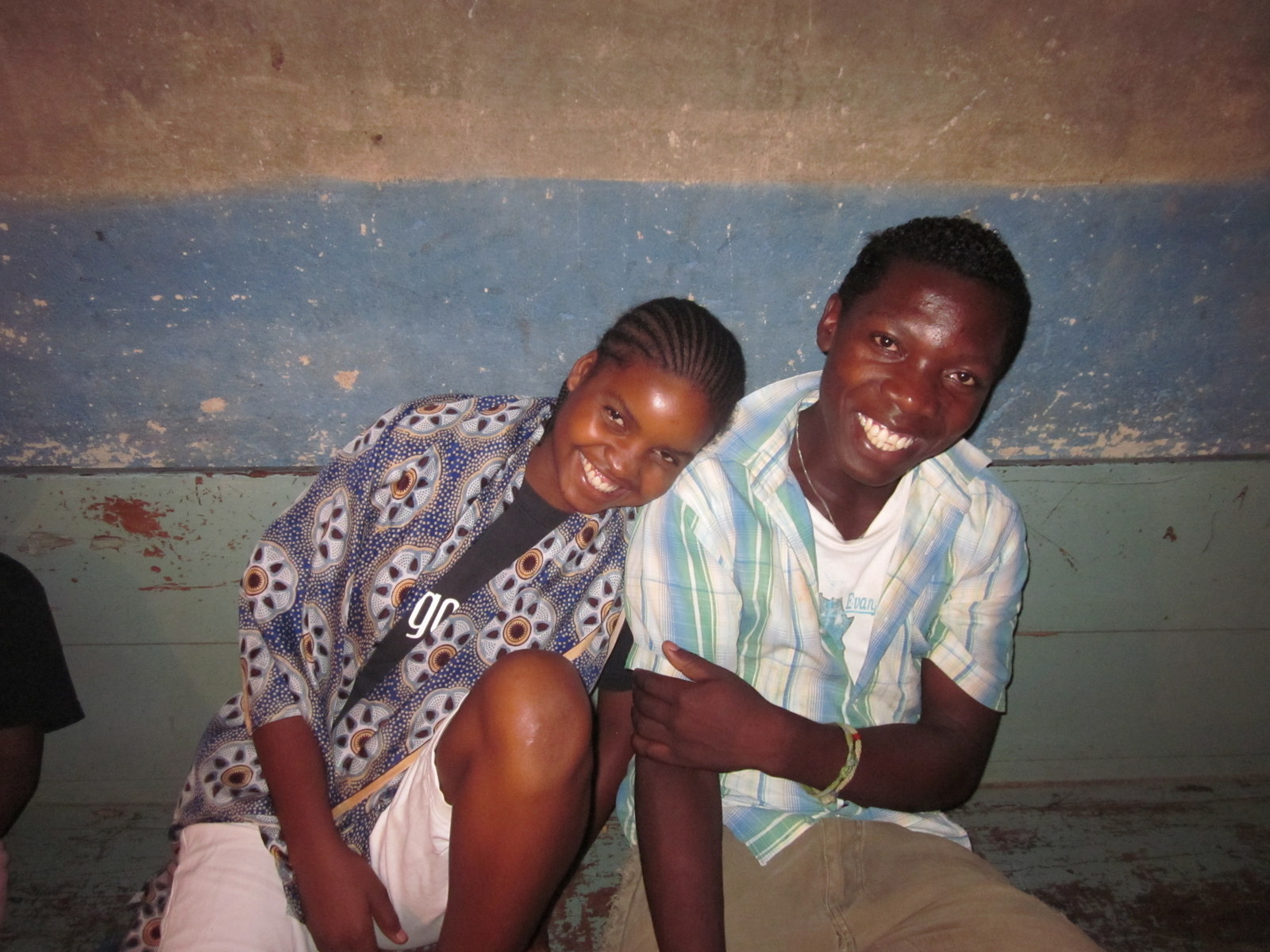
Like the memories, the photos are of the things I'll remember. They are not of the imposing mountains, the sunny beaches, the starry skies, the building we built, the events and activities, but of people.


I know you're not supposed to have favorites, but I do. It's also hard not to be impartial when you have certain kids that are always setting things on fire and other that aren't. The one's I'm drawn to are not because of anything they've done. The thing is, as I've explained before, nobody is without anybody. Everyone has an uncle, and grandparent, a mom, and older brother or sister who has left the orphanage, a cousin that goes to the same school. There are only a small handful of kids that have absolutely nobody to rely on. In part, it's because they completely realize that they are forever dependent on God. One such family is Jose, Jordao and Dorcas, who have absolutely nobody to rely on other than their senile Grandma—Jordao said one day, "I think Jesus is calling her because she has got to be getting close to going." The ones without family are the ones looking for it, for care and a connection, for protection and love.


Just as I have long known and only more fully realized here, my relationship with God is also fully realized when I am truly dependent on Him. Not just dependent for happiness, peace, forgiveness, and spiritual niceties, but for food, water, health, life. In the same way, I feel the kids here who grasp and have the simplest, purest picture of what Jesus does for them are the kids that have nobody to run to when it gets hard. As difficult as it is to imagine, we are not the first place the kids run to with problems. But for some there is nowhere to run. Little Victor has nobody to help him. Victor has a testimony that will break your heart, and his mom lives shouting distance from the orphanage. Victor is the kind of kid that come Friday I'll give him some spare change to get a pop after school or some fresh sugar cane and he instead offers the money to his mom, not out of fear or obligation, but because he knows that it truly better to give than receive.


In line with the immeasurable joy that comes from seeing a life transformed by Jesus also is the ache and frustration of those that don't accept the truth. For every Little Victor that has not only been spiritually changed by Jesus, but his entire destiny rewritten there are countless more that end in tragedy. People that make tragic decisions and set their lives on a tragic path and you spend you time trying to speak to them and reason to them for them to see that the decisions they are making are taking themselves on a path they can't come back from. It is the absolute definition of tragedy, in which their decisions seal their fate. I have written about so many kids that we have sent off to jobs and training and schooling. How many times have I written about when they came back?


People that come here and experience a family that loves them and treats them as equals. And when it comes time for them to make their own life, for some that is the last we hear of them. One boy still has a horde of younger siblings here in the orphanage and almost three years after for a job in another city and he has never looked back, come to visit, or even check in. If I call, he will eventually pick up on maybe the second day of me trying. Always cordial and polite, as soon as I tell him I'm standing right next to his younger sister who would love nothing more than to hear from him the line goes dead.


You can even say that it's like the prodigal son. They are people that, in some respects, the best parts of their lives have come from the orphanage—the first place where they weren't always sick, the first place where they didn't have to go labor everyday, the first place where they weren't shuffled around between relatives, always a burden and unwanted, the first place they knew they wouldn't have to fight for food, the first place they knew they had a bed to go to at the end of the night and wouldn't be living in abandoned houses, the first place their relatives didn't lock them out of the house at night, burn them with coals for not returning with enough money after a day of begging on the street. It's like the prodigal son, except they haven't come back yet.


One thing that has deeply encouraged me is 10%. That's where the bar was set. In the Gospel of Luke, Jesus encountered ten lepers who cried out to him from a distance. Jesus told them to go find a priest and they were healed as they went. The, only one came back to thank him. You think receiving a sentence like leprosy—destined to die a slow and painful death over many years, possibly decades, cast out from society—to have that erased, your destiny changed by God himself would merit the lepers going back to Jesus. But only one did. If Jesus only got ten percent, how much can we hope for?


And that probably sounds like a real drag. I've only invested in these kids from three or four years and I am distraught knowing that some of them will leave and never look back. Like the multitude that followed Jesus after he gave them all bread and fish, he told them to all go back home because they were only in it for the food.


I know that part of it is my maturing process, but this is the first thing I've done where you don't get to say that the payoff just at the end of the year. It's not cramming for tests at the end of the quarter and then you're done. It's not doing development on a project and then passing it off another group for the next stage of development and testing, finishing a remodel, completing a roof. It's not even like working on a car, because while things here are clearly breaking down all the time, my cars never improve, they just stave off death for another day. It's not even like prepping for a concert and then there is a big performance, or leading new Christians through discipleship where you see the growth and struggles in vivid leaps and bounds. This is the long approach, the realistic approach. Only a fool goes to a third grader and says, "You are going to learn everything you need to now right now. Recall these lessons later as you may need it."


One of the most vivid experiences of my entire life was a certain trip to the toy store with my dad. Normally they were great occasions. A new whiffleball bat, a puzzle, a board game. It was near Christmas and I was in second grade. As we walked in the door my dad said you can have up to fifty dollars total. It was amazing. There was no Christmas list and then hoping and praying you got what you wanted. It was cutting out the middleman. I got vetoed on a Nerf gun, but got a board game and set of Legos. It was turning out to be the best Christmas ever.


And then the happiest Christmas ever turned in to the worst Christmas ever. As I carried the bags to head out the door, my dad asked me to hand it over to the marine that was at the Toys For Tots donation table. I was speechless, dumbstruck, did as I was told, and I went home empty-handed. In the car ride home I must have gone through all twelve stages and grief and then looped right back around whichever stage is responsible for being just plain pissed off. I got home, was sat down, and explained that while I was having the worst Christmas ever, it meant that another young boy that ordinarily wouldn't get anything would be unwrapping the toys that I donated. I was assured that one day I will understand that, just as Jesus said, it is better to give than receive.


I understand now.


Those are the lessons I'm hoping stay with the kids. Not painful lessons that they will carry with them until one day they realize it was true all along, but that one day when they need to call on it, they'll know the right thing to do and the way to act and how to please God. That is the long approach. Whenever there was something (usually work) I didn't want to do I was told by my dad the reason to work was that it would put hair on your chest (my dad had it easy only having sons, because that motivation is clearly not universal to both genders). I try to get the kids to realize that when we have work and chores that the purpose is to prepare them for everything to come. Sometimes, work is its' own reward. When you are faced with a tough choice, it's always better to follow Jesus, even if it means life will get harder, because that's the great paradox we follow, that to live your life is to lose it. And those things I picked out at the toy store, I ended up unwrapping them at Christmas several days later.


When Peter is out fishing, Jesus calls to him, "Follow me." He doesn't say, "Let's go to Starbucks and have a chat," or even come right out and say, "Hang out with me for three years before everybody I know turns their back on me, including you, and I die a horrible death." Even after Jesus is resurrected, he asks Peter to follow him again. This is right before Jesus ascends into heaven. Peter obviously didn't know where to go, but he agreed to follow.


And now it's time for me to follow Jesus somewhere else. In some respects it will be easier. I'll get a job (Lord willing), find a place to live, and look for that special someone. I believe the common term used to describe it is "settling down". I would like to know what part of it is settling down. I went from bouncing around during college, never having to do maintenance and home repairs. I went from not having kids to taking care of fifty of them. I got to skip the newborn phase but got them as they were colicky 4 year-old, ten year-old boys running around breaking bones, filthy teenage boys that you wonder if he is going to wear that t-shirt till it falls off his body or if he's going to shower sometime, and moody teenage girls that you just have no idea what is upsetting them (answer: nothing, and yet everything).


Settling down is the scary part. I came to Mozambique knowing at the deepest part of my being that it what God made me to do. And I leave with that same trust. It does not mean that either decision is any less scary. It doesn't mean I have an idea what I'm to do any more than I had absolutely no idea what what to do when I came to Nampula. I just know that it was needs to be done and I am thrilled by just knowing that much.


I was talking with a group of friends before I left to come here way back in 2010. They were mentioning all the exciting happenings I'd miss by not being in Seattle. One friend was joking and had asked just why I had to go to Mozambique. My answer was, "I have to. It's what God made me to do." The answer caught them off guard for its simplicity and unexpected profundity and halted the lighthearted mood of the conversation. There was then about a minute of silence and staring off into the abyss, each one wonder for him or herself, "Wow. Then what did God make me to do?"


This is not my sunset, this is not the close of my book. It is the close of one chapter, the end to one part of the story. Better parts are coming, and worse part are coming too. Happier and sadder and fuller and richer and more fulfilling and challenging. Yes, even more challenging than life in Nampula. This is not the cliffhanger where it looks like all is lost for our hero—stay tuned till next week to find out if he makes it! I'll make it. Because I know what I was made to do.


I enjoy weaving stories. I can't say that there is a defining thread or current that courses from one episode to the next. I don't even know that many of the stories are that coherent on their own. But I do love telling the stories. There are plenty more stories to be told here, but they're not for me to tell. They will left to tell for someone else. As the children here that I've come alongside with have grown, are growing, and will be writing their own stories someday. They will be nurses, lawyers, farmers, engineers, mechanics, chefs, policemen, carpenters, teachers, pastors, fathers, and mothers. They will struggle mightily, fail spectacularly, and succeed monumentally. I won't be here to see their story unfold. I won't be here to participate in it, to help it, to mold it, to encourage and chastise and correct and encourage and celebrate in it. But he story will be written because I am not The One writing it.


The scary thing is that I don't know what I'm going to do. Much like coming here. That's why it is fun and crazy. I believed that if God was truly calling me to Mozambique than he would also provide for me after I got back. I still believe that. It's hard and scary to trust, but I do.


There are many things that I will remember from my time in the orphanage, but there is one set of memories I'll keep with me the most. Not of chasing after bandits, nor going to the beach with the kids, nor coaching basketball, sneaking into the high school and substitute teaching, attending feasts, watching movies projected on the wall, staying up past midnight huddled around the radio listening to soccer games. The things I remember the most are entirely different. Sitting around chatting in the evening.


Planting and gardening with the boys.

Playing soccer on Saturdays.


Doing homework, teaching multiplication tables, having spelling bees.


Laughing at absolutely nothing over dinner.

The movie Up, aside from being the only movie I've ever seen that made me weep within the first five minutes, features the most unassuming, profound, life altering quote I've heard from any movie.


When the old man Carl sets off on his adventure and his house floats away tied to a thousand balloons, he is joined by a young tag-along named Russell. One day, Russell was reminiscing about his dad: "And afterwords we'd go get ice cream at Fenton's. I always get chocolate and he gets butter-brickle. Then we'd sit on this one curb, right outside, and I'll count all the blue cars and he counts all the red ones, and whoever gets the most, wins. I like that curb.


"That might sound boring, but I think the boring stuff is the stuff I remember the most."

March 9, 2013

My Legume

This is peanut, our newest kid. His real name is Eduil, but I call him peanut. If I'm speaking in English I refer to him as peanut. If I'm speaking in Portuguese I refer to him as the portuguese word for Peanut.

Nicknames here are a very very strange thing. It is very common for people to have a nickname here. Usually they are called "house names" and so many people have them because... I don't know why. These are not abbreviates as nicknames like Katie or Suzy or Johnny or even odd ones like Billy. They are often different, completely normal names that are given in place of a given name.

On a side note, I thank my parents for naming me TJ because I went through school with so many other Tims it would have been an identity crisis. And kids are mean! I remember there were two kids particular I went to school with that had the same name. Using Bill as an example (real name changed to protect the innocent) we called one "cool Bill" and the other "not-cool Bill".

The orphanage has a long history of nicknames due mostly to bad luck. Many of the boys have a nickname that is not their given name. After talking to everybody here, I think I have pieced it together all the way to Joao. When he showed up I think there was another Joao here, so instead of calling them Number 1 and Number 2, or by their last names, they decided to invent a name and call him Carlitos (little Carlos).

This was fine till a real Carlos showed up. Rather than changing Joao aka Carlitos to something new, they changed the real Carlos and called him Zaqueio (like the character Zacceus in the Bible). This boy was not particularly short, nor did he live in a tree, it just was given to him. Then, after bestowing the name Zaqueio, along came a new kid called Zacarias. Deciding these were to similar, Zacarias got called Samito (little Sam). As of yet, there has not been another Samito showing up to throw a bump in the road.

Eduil does not have the problem of sharing his name with anybody else. In fact, nobody here has ever heard of his name before. Supposedly it is Malawian, but he is not. Eduil's nickname comes from that the fact that his BFF can't say his name properly. Eduil is in first grade and the same age as Dorcas, but is attached at the hip to Jose. Due to his speech difficulties, Jose has difficulties speaking Eduil's name properly. Instead of saying "eh-doo-wheel" (emphasis on the wheel) he says "meh-doo-whee". It's a slight difference, but enough to make it sound like Jose is saying the Portuguese for peanut.

And because Jose doesn't do anything less than 110%, he was often heard shouting "Peanut!!! Peanut, where are you," causing everybody to break out in laughter the first several days. After a week everybody just took to calling him peanut. We still laugh. Eduil is young enough to know that his name is not peanut but thinks its funny that everybody calls him peanut. We're not making fun of him. Far from it. We're branding him as part of our family.

February 26, 2013

My Other Delinquent

      "My teacher wants to talk to you."
      This year I told the kids that I do not want to talk to their teachers. There are no circumstances when I will talk to their teachers. The only exception I will make, I told them, is if the teacher requests my presence to be on the jury to determine who brought the best meal on the once-a-quarter occasion that the kids are asked to bring a dish to share with the class. I will accept food juries. Always. And now Jordao had asked me to do what I absolutely did not want to do.
      "What did I tell you?"
      "You said you don't want to talk to my teacher this year." Jordao eyed the ground sheepishly.
      "So why are you telling me this?" I pondered
      "Because my teacher wants to talk to you." Jordao was insistent
      In the states, if a kid has a problem it usually means a call home to mom or dad. I the states, a teacher saying he is giving your parents a call is followed by fear. Fear leads to racing home to delete the message on the answering machine before your parents can hear it. This is followed by the teacher assuming the child raced home and deleted the message on the answering machine. The teacher then decides to go over the student’s head and calls the parents' work number to explain that TJ and his best friend had been left behind on the field trip and the vice principal had to personally drive out and get them.
      Here in Mozambique, getting a phone call would be nice. It is nice because you can just not pick up when you really don't want to hear that your child has started a dojo and is giving karate lessons during recess. Or when you don't want to hear that your child was chasing other kids with a dead cobra. Or when you don't want to hear that your children were using bamboos as light-sabers after watching Star Wars that weekend.
      As a parent, phone calls would be nice. In Nampula the parent gets summoned to come school and have a face-to-face meeting the teacher. There is not after a phone call or several interventions prior to this. This is cultural custom, not a disciplinary procedure. Still, for being cultural, it feels very disciplinary. If you want to hash something out with somebody, you summon them, they come, and you sit down and hash. Hashing is not my favorite thing to do here.
      "So, knowing that I don't want to go school this year to talk to any teachers because my kids are being undisciplined, you come to me to say your teacher is asking me to come to school because you are being undisciplined. Is this correct?"
      "Yes." Jordao was now aware that it was my goal to make him aware that I wanted to shame him for being undisciplined. Rhetorically, and mathematically, he was now doubly aware.
      "I there food involved?" I hoped.
      "No."
      "So why are you telling me."
      "I didn't want you to think I was undisciplined."
      "So you decided to not be undisciplined by telling my you are undisciplined?" At this point my hand is massaging my supremely furrowed brow.
      "Yes, exactly." Jordao's showed that he was pleased with his reply. The pleasure quickly faded and confusing set it. "Wait...what?"
      Jordao is fifteen years old and a smart kid. There is absolutely nothing that Jordao does without having a reason for doing so. But Jordao does not do normal things like a normal person does normal things. All it takes is talking to Jordao to pry at the reason for doing such abnormal things and you will discover he has thought out every aspect of every detail all the way down to when others will undoubtedly ask him what he is doing. Jordao planted chicken bones in the garden because if you put corn in the garden, corn will grow. If you put spinach in the garden, it too will grow. So Jordao put chicken bones in the garden. No, it is not a magic garden. It is a normal garden and grows normal food. Once, Jordao got up in the middle of the night and started raking leaves. The guards told him to go back to bed. He calmly explained he was woken by the sounds of a cat and went to go see where it was coming from. Upon going outside and noticing the leaves on the ground he started raking because, as he put it, "The leaves aren't going to rake themselves." It was 2am. One we were digging ditch. There was a spot we were not supposed to dig because a water pipe had been previously laid there. Jordao, seeing a spot was undug, starting digging. After striking the pipe, water started gushing out. The pace of his digging increased as he announced, "Hey guys, I discovered a well. It's coming from with pipe."
      Despite his disadvantage, Jordao is a very reasonable person. That is why he is a smart kid. Unfortunately, though, Jordao is not a smart kid.
      After talking to him for a while longer, I discovered that Jordao was showing up to school the first several weeks to play hookey and kick the soccer ball around rather than go to class. He thought that since he was repeating third grade, he would just have to pay attention come the end of the year when things get difficult in order to move on to the next grade.
      One day, after not going to class, Jordao decided to go to class. His teacher that Jordao had been playing hookey all these weeks because Jordao is fairly well known at his school. His teacher asked him to go get his dad. Despite making a good decision to study that particular day, Jordao made a particularly bad decision by telling his teacher that his dad left for work and wasn't at home. At this, high classmates, feeling either too much or not enough sympathy for Jordao, told the teacher that Jordao doesn't have a dad and lives in the orphanage. This exacerbated his condition considerably.
      "And then he put his hands in his pockets." Jeremias reeled with laughter.
      "No he didn't!" One exclaimed.
      "You're kidding me." Another added with laughter.
      "Seriously?"
      "Honest truth, he put his hands in his pockets." Jeremias placed one hand over his heart and the other in his pocket as if to demonstrate for those that were unsure what a hand or a pocket were.
      I, having already refused to go to school for these kinds of situations, decided to send one of the older boys with him to school. This is also an acceptable practice here because so many folks are taken care of by uncles, cousins, or neighbors that really anybody could pass as being your guardian. This boy, Jeremias, is pretty good-natured, polite, and knows how to tell a funny story, so it would be better to send him for our entertainment purposes.
      Upon Jordao and Jeremias' return, we asked him how it went. Jordao refused to say. Asking Jeremias provided an answer. The two arrived after school to talk with teacher where Jeremias explained he was sent to hear Jordao's case. Heard straight from the teacher that Jordao's would dump his backpack in classroom and slightly soon thereafter, as was his habit, would announce, "I'm not really seeing anything to to here," and go play soccer with all the other delinquents who also did see anything to do there.
      Jeremias asked Jordao to apologize to his teacher that promise that he would reform and start attending class. Having been fully embarrassed at this point, he apologized and promised to reform. His teacher accepted the apology and obliged Jeremias for coming. Then Jordao decided that he would like to contribute to the discussion. Clearly, Jordao was not invited to contribute, nor had he anything to contribute, but having not yet justified his desire to skip school he decided that there is no time like the present.
      "And then he put his hands in his pockets." Jeremias reeled with laughter.
      "Jordao, did you put your hands in your pockets?" I inquired of him, stifling my own laughter.
      "No." He pleaded.
      "You didn't put your hands in your pockets?" With Jordao, the key to ascertaining information is to ask a question in as many different ways as possible.
      "No, I'm telling you the truth. Look, I did this." Jordao proceeded to put his hand in his pocket. Laughter ensued from the onlookers.
      "You put your hands in your pockets?"
      "No, I put my hand in my pocket. Only one. I'm telling the truth." Jordao is a smart kid. He was now visibly upset with the turn the mornings proceedings had taken. He certainly could not have foreseen that skipping school to play soccer, repeatedly, would have consequences. Jordao is not a smart kid.
      "Ask what he did with his other hand." Jeremias chimed in, barely able to speak in an understandable manner through fits of laughter.
      "I'm afraid to." I countered. But before I could ask Jordao he had started walking away as Jeremias continued the story. "He took his other hand and started pointing a finger at his teacher."
      "No he didn't!"
      "You're kidding me."
      "Seriously?"
      It was possible that up till now Jordao's teacher could have been understanding of the circumstances Jordao. Despite being a reasonably thinking person, he is not always the best at thinking reasonably.
      This is the person that once got up in front of a meeting of everybody at the orphanage in order to speak. His story started as, "When I came back from church I found Isac in my backpack stealing my crayons. Then Isac grabbed me—." The story also ended there because as Jordao continued talking he slapped a hand over his own mouth, mimicking the actions of this other boy that day, and continued to tell the story. Jordao mumbled through a muffled mouth for two minutes, deadly serious, while recounting this great injustice that had been done to him. Everybody lost their collective senses laughing at the scene of Jordao pantomiming and recounting the fight between them, all the while unaware that his hand was still over his mouth and rendering everything he said unintelligible.
      Jordao's teacher could have been understanding that, while Jordao is sometimes the sharpest tool in the shed, his elevator doesn't go to the top floor. His teacher could have understood that one hand in one pocket was only half as insulting as two hands in two pockets. But when Jordao started pointing to reprimand him teacher might have lost all understanding and been so insulted expel Jordao right then and there.
      Jordao had put a hand in his pocket, pointed at the teacher with the other. Thus, desiring to speak, he opened his mouth. This is a serious of bad decisions getting worse. Jordao had no sooner said, "You, look here for a minute," when Jeremias, performing his parent/guardian admirably clapped his hand over Jordao's mouth and whisked him away. "I think we're all done here, sorry again about the trouble." Jeremias shouted, by now practically carrying Jordao as they hurried off.
      "There wasn't any food, was there?"
      "No."
      "Good. Well, then it it sounds like everything turned out just fine."

February 10, 2012

Our Family


[Note: This is kind of a long post. In fact, it's a really long post. About four times longer than what I normally put up here. The reason is I worked a really long time on this one and believe it should be read as a continuous narrative, not broken up into little parts. With that in mind, I ask that you read it that way. If you don't have time now, come back to it later. Print it out to read it some evening. It might take you a little while to get through, but without understanding this, the rest of the stories here are just cheeky anecdotes and amusing tales. So please, read and enjoy, and maybe even pass it off to a friend when you're finished.]
 

You don't know what it's like.

Lets just start with that as the premise. You can't sympathize, you can't relate, you can't know how it feels. You simply don't know. You come from a life and a culture that is so foreign to the challenges and difficulties and the struggles that are part of the fabric of life here. But in understanding what goes on here there is no way to separate the individual threads from the whole tapestry. What I will be writing today I've already tried in the last several weeks to explain to the closest of family, to the best of friends, all the way to the strangest of strangers. The only way I have found to adequately explain it is by laying down the premise that you simply won't understand.

You don't know what it's like.

That is the admonition I have for you today. I want to warn you that this is not something that is intellectually out of reach as if I were explaining rocket science to you. It's not something like modern art that you either appreciate or think is unintelligible. It is as if I were asking you to hear colors, or draw with sounds. You have no adequate frame of reference for even understanding what that would mean. You're picturing yourself drawing with sounds right now, but I assure that you're doing it wrong.

Because you can't even begin to know what it's like.

The reason for this is that I'm going to tell you what our kids did for Christmas. Rest assured, it's nothing shocking. We weren't doing animal sacrifices or getting matching tattoos or something salacious. But at the same time, it should be absolutely puzzling and alarming: We sent the kids to be with their families. For the end of December and Christmas the kids got to spend two weeks with their mothers, fathers, aunts and uncles, grandparents and cousins.

Did you hear that? I sure did. That was the sound of you brain saying, “What!?! I thought you ran an orphanage, not a boarding school or summer camp. What do you mean send then them to their families? Their parents?” Let me try to calm you down some.

January 19, 2012

More Kids Out and On Their Way

Having mentioned earlier in the week about a few of the kids that have left/graduated/moved on, I thought it be good timing to mention the most recent kids that have gone on their way. They are all going off to pursue extra-curricular studies a.k.a. vocations. In Nampula, that is a surer way to get work than earning a degree from a university (or even diploma from high school).
Their responses to the questions are in italics.

ISATY
Isaty is a very hard worker and very adept at learning with his hands. He wants to do a year long course in auto-mechanics. We basically told him him that we have full confidence that any skill he puts he hands to he is dedicated enough to learn it and master it.

Age: 18, came to the orphanage at 10 years old and in 2nd grade.

What will you be studying? Why? General mechanics because it is a service oriented job and I don't quite have the skills to do something academic.

What do you hope at the end of 2 years to be able to say? I want to be in Nampula and be close to my family. I want a job at a respected garage, not just as a call-for-hire mechanic.

What are your favorite things to do (at the orphanage)? What will you miss? Miss my brothers that are here and for everyone else as well as the work and projects that we do around here.

How would you like us to pray for you? For me to understand the subjects and stay healthy, as well as for my relations with my classmates and instructors.

ZAQUEIO
You might recall from this time last year about we mentioned Zaqueio in a group of kids that didn't leave. We had wanted to sent him to a trade school in Beira, but shortly before January rolled around he came down with a mysterious stomach illness that saw him do at least three stays in the hospital and the doctors were contemplating surgery. Because of that, he stayed around waiting the start of the next school year (Jan).
He is one of the best kids we've ever had. It kind and considerate to a fault, and takes initiative in helping others and with the maintenence and construction projects here.

Age: 22. Came to the orphanage at 15years old and in and 3rd grade.

What will you be studying? Why? Electricity. Its something that I like to to and enjoy doing it when we have work around the house. Its a trade that I picked up a while ago. I like getting shocked, it'll help me live longer.

January 16, 2012

In Which the Kids Give Back

I can't really call them kids, because they're men now, but yesterday we got treated to something special thanks to these two.

Last year at this time we sent these two kids (along with about three others, all from the orphanage) down to Young Africa Vocational School in Beira, south of us.

Carlitos (left) had finished 12th grade and Felex finished 11th. They both did six-month courses; Carlitos in accounting, and Felex in refrigeration and air conditioning. We helped them find internships up in Nampula which they performed for three months and at of the start of November each got hired as full-time, salaried workers in the same places they interned.

November 25, 2011

Giving Thanks with Our Crazy Family

I have two crazy families. One is back in Seattle and I was thrilled and overjoyed to wake up in the middle of the night and Skype with them for a little bit as they were all together to celebrate Thanksgiving.

The other family is crazy too, and they number as almost fifty of the best kids you can find in Mozambique. I mean that very sincerely and tell them that quite often. We also, like any family, have a healthy amount of, hmmm, how should I put this...

...friction?

Even the best of families get under one another's skin every once in a while. Its just a part of being human. And no matter how well the wheels are spinning, there's just something magical about the holidays and everybody getting together that just seems to suck all the grease right out of those bearings. In truth, there's no such thing as Thanksgiving here because there is no commemoration of the Pilgrims fleeing England and arriving on the shores of Mozambique and giving thanks to God while sharing a meal with the Indians. That never happened. Because we're in Africa. Not Massachusetts. Still, I thought it'd be fun to do a little something for thanksgiving by having the kids thank each other.

After breakfast I gave each of the kids a note card and asked them to write the name of somebody they wanted to thank and the reason why they wanted to thank or recognize them. They stressed that they didn't have to recognize or acknowledge only something that a person did for you directly, but it could be things that people do that benefited another person or even everybody in general. I also stressed that we were not voting for anybody, we just wanted to take some time to thank people.

After everybody sat around for about five minutes thinking of things (during which I encouraged people to be more aware when folks are helping and being selfless if it takes five minutes to find just one example) they actually wrote some really nice things about one another. Most of the things were actions not benefiting the writer directly. They were things like helping in the kitchen during the weeks that I was sick and the rest of the staff were in Zimbabwe, or how certain kids had taken an extra effort to help with construction, or kids that have been helping the younger students learn to read and prepare for exams at the end of the year, or people showing up early at church to help clean and prepare it for Sunday services. I'd say close to 75% were incidences of people doing things to help in general around the orphanage and with the day-to-day of life. I told the kids I was really happy hearing all the things they had to say.

Then, because the kids should know the nice thing others see in them, I gave all the cards to their respective kids so they could have them and know that the things they do are known and appreciated. The kids that got cards were really happy to receive them and read them.

The kids that didn't get cards? Not so happy.

While all of the kids filled out a card, the ones that got noticed were only about ten kids or so, with each receiving multiple thanks. Those kids all rightly deserved the nice things said about them. The problem is, there are also a lot more kids that do nice things and deserved to get a card and just plain didn't. I made a point of going to the six or eight kids I though really deserved a card but didn't get one to tell them how thankful I was for specific things they do, even if they didn't get a card. The problem is there are only about five kids who are completely selfish and don't deserve cards. That means about twenty kids got left out in the cold.

This was the scene I noticed at lunch. A kid finishes his food, stands up to walk his plate up to the counter and put it in the pan to be washed. The kid passes another who has also finished eating and motions to the one walking to take the plate with him the way. The one walking says to the one sitting, “Why should I bother taking your plate if you're not going to vote for me? Take it yourself.”

Ummm...

Later, a kid asking to borrow the cup of another to go get a glass of water. The one with the cup says, “And when was the last time you lent me your cup? Only if you promise to write a card to me next time.”

We might...

A kid carrying a bucket of water to go use in the construction of the girls dormitory asks another to help him carry it. The other responds, “No way! I work in the construction too and nobody ever thanked ME for it.”

...have...

A kid is pulling clothes in from the line and the wind picks up and blows a shirt off the line. As the shirt rolls like a tumbleweed it passes a kid playing in the shade. The one taking down clothes shouts, “Hey, quick. Grab my shirt fast.” The child in the shade doesn't even look up and drolls, “I helped you clean the bathroom yesterday when it wasn't my turn and you can't even vote for me with your card.”

...a problem.

Little did I know that a fun activity meant to thank and encourage folks was going to turn into a day of envy and folks that were not thanked were taking it out on their fellow kids here by flat-out refusing to help so they could spite people. Thankfully by dinner, most of the angst had worked itself out and people were back to their normal, helpful self. I made sure to explain that night at Bible study that the activity was not meant for “voting” the winner or most helpful, nor to discourage people from helping, only to thank and recognize people well deserving of it. I also tried to bandage the wound a little bit and tell them they all help a lot and, if it wouldn't take two days, I'd write a card thanking each of them.

But still, I kind of liked the activity, and the kids that got cards sure loved it, so maybe we'll try this again in a month or so and let kids write an unlimited number of cards and hope that nobody's feelings get hurt at the end of the day.

As for us, our dysfunctional family here is back to its old, normal, non-spiteful, crazy self. For that, I am very thankful.

Happy Thanksgiving, everyone.

October 12, 2011

In Which Kids Fight Inanimate Objects

The second had-to-be-there story this weeks comes from just a few days ago. But first, it involves knowing two of my favorite kids here: Jose (whom you've all met before In Which TJ discusses behavior) and his brother Jordao (The one about what Jordao wants to be when he grows up).

For those of you that forgot, Jose is mentally handicapped and we think physically too. We only think physically because legally he's 13 and currently the size of a 7 year old. He lost a tooth last week. A baby tooth. That he still had. He has problems talking due to his gigantic tongue and will probably remain in second grade the rest of his life (which if he remains the same size nobody will notice).

Jordao is in second grade with Jose, except he is a normal size, for a 14 year-old. (Jordao entered school last year for the first time as a 12 year-old in first grade and has a long way to go as far as catching up is concerned.) We last heard from him when he said when he grows up he want to be a pilot. Jordao has the problem of not being able to perceive communication. We're not sure if his difficulty is in the hearing or the thinking (thus wanting to be an airplane when he grows up).

April 25, 2011

In Which TJ Discusses Behavior

Not every detail of every kid gets put into cyberspace because of privacy concerns, but here I try to be as close to an open book as I can be. Each kid we have is deserving of his or her own post. The kid I’m talking about today is probably deserving of his own site dedicated to all the goofy stuff he does.

The kid I’m talking about is Jose. For people that have ever been to the orphanage in the last year and half, you know who Jose is. Jose is all of 3 feet tall (1m), and we registered him as being 7 years old because that’s how tall he is. In reality, Jose is about to turn 13 but has the mind of a 5 year old. Aside from having the body of a seven year old, he has problems with physical coordination, can’t count past two, and has a speech impediment that makes him slur all his words and unable to pronounce at least half the sounds he needs to communicate.

I blame his awesome Gene Simmons-esque tongue.

Jose is here with his older brother Jordão and his younger sister, Dorca. While Jordão is also learning impaired, he is physically normal and has adequate skills. A large part of Jordão’s learning disability, I believe, is that he never attended school until last year at the age of 14. Dorca is 4 and we honestly have no idea if she’ll exhibit the same problems as her older brothers.

February 9, 2011

The one about what Jordao wants to be when he grows up

Growing up in America there is a certain requirement for young boys to have certain aspirations for when they are older. These aspirations usually include wanting to grow up to be a baseball player, a dentist, a firefighter, a G.I. Joe, or a NASCAR driver. That last one was probably just me.

Growing up I never knew what little girls wanted to be. I always assumed they wanted to be married to baseball players, G.I. Joes, or NASCAR drivers.

Or married to a dentist.

We try to get our kids to aspire to high goals around here. When they say things like, “One day I want to be the governor” we don’t laugh at them at tell them to be realistic. They get encouraged to study hard and excel in school and know about what is happening in the world today. Lately, because school just started back up and with all the kids we sent to vocational school I’ve been asking the kids what they want to be when they grow up.

One day last week all the kids came up to me after school laughing at what Jordao did. Jordao is in second grade and when his teacher asked him what he wants to be when he got older he replied by saying he wants to be an appacho. That’s slang around these parts for guys that hand out in the industrial part of town and carry 100lb sacks of cement on their heads to the trucks of people that purchased the cement sacks. Its one of the crudest forms of work around here and all the guys that do it are illiterate, uneducated, and often crazy (from all that weight squishing their brains). They are lucky to get paid about a dollar a day for work.

It was actually pretty funny because he’s only in second grade and probably just got nervous in front of the class and couldn’t think of any other occupation, but it underscores a more serious point. A lot of the kids come in off living on the streets or roaming about in the jungle. Until we start explaining to them that (most) jobs don’t depend on your uncle being they mayor they have no idea that there are jobs here meant for people with a high school education and a knowledge of what the alphabet it. After explaining to Jordao that if he studies hard enough and passes school he could be anything - a banker, an electrician, or a teacher - he changed his mind. He decided he wanted to be an airplane.